

How Tim Burton warned the world that Trump was coming … with a little subversive help from his writers.
Déjà vu is the brain’s pop-up ad: unsolicited, oddly targeted, and over before you can swipe it away. Neuroscientists ascribe the sensation to a brief electrical burp in the hippocampus, that velvet-lined card catalog of memory—where the neural circuit for familiarity accidentally fires a fraction of a second before the circuit for recollection can veto. As soon as you feel, ‘Wait, I’ve been here!’ your autobiographical mental files scramble but come up blank.
But there’s more going on than a simple wiring glitch. Human perception is a pattern-spotting machine tuned for economy. Psychologists point to ‘schema,’ a narrative scaffolding we erect through habits. Commute the same streets, attend the same meetings, scroll the same feeds, watch the same current events play out on TV, and you teach the brain to auto-complete experience. With déjà vu, novel situations feel rehearsed because the underlying play — plot, characters, dialogue — feels identical.

Philosophers, never shy of a metaphor, call déjà vu a tear in the fabric of the Now, revealing the past as undergarments of cloth, some bright, some faded, always there.
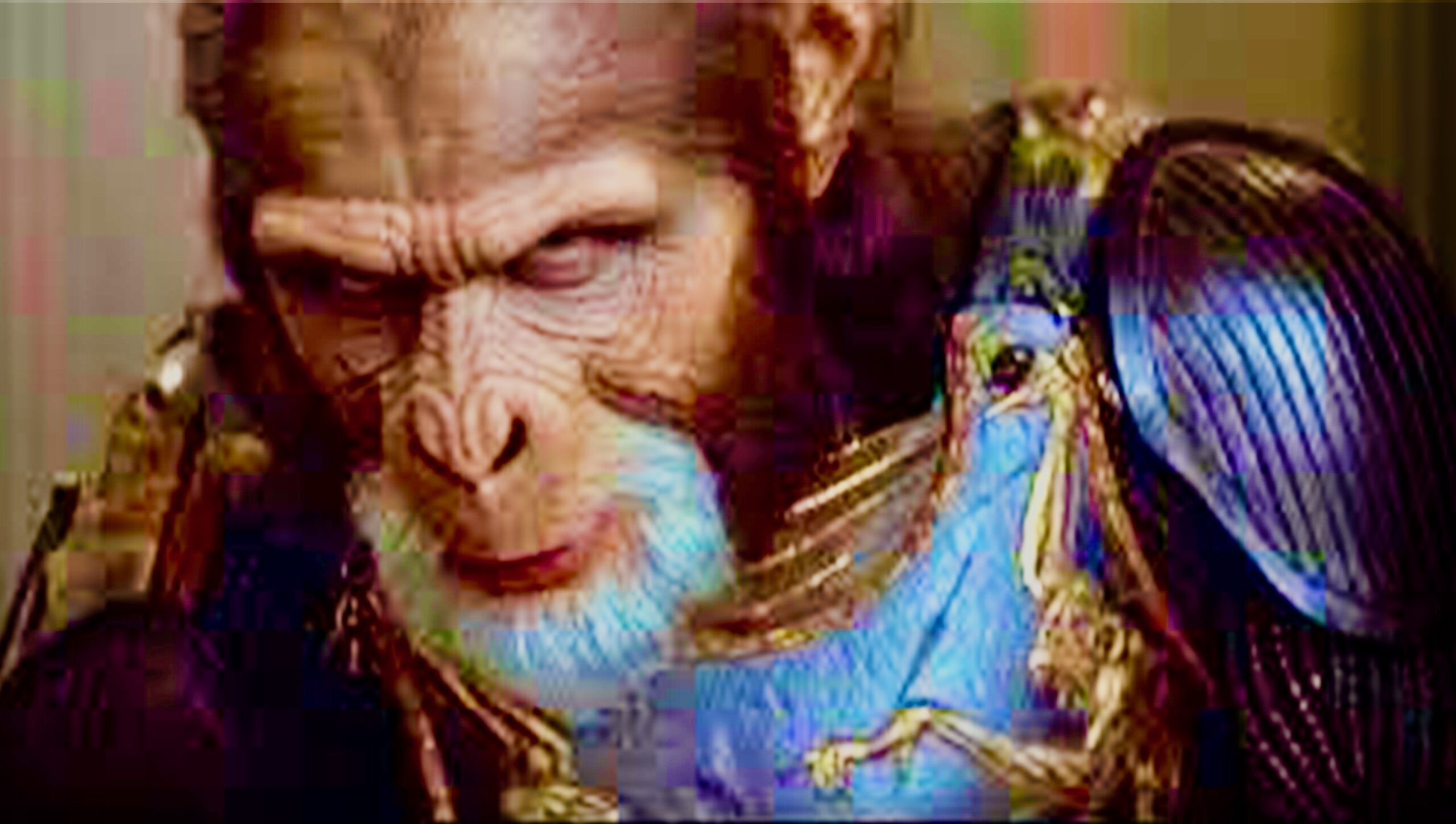
Lately, watching the news, and watching the fabric of American democracy being rent, well, more like being shredded, by Donald Trump, I was frozen by a fierce jolt of deja vu when I saw this image on TV …
And I instantly thought, ‘Hey, I already wrote this story!’
On an oppressive July 4th holiday afternoon in 2000, the humid air suffocating my guests, I was playing with the barbecue, since, much more than grilling, I love making fire. I lived in Bucks County, PA then, and it was, and still is, a ‘ruburbian’ shire, with many historic ‘gentleman’ farms protecting the open space from the massive sprawl down the road towards Philly. The phone rang, and my wife Kim said, ’20th Century Fox calling for you!’ On a holiday? It made no sense. I ran to my upstairs office and closed the door. It was Tom Rothman, Chairman and CEO of Fox Filmed Entertainment. (Again, on July 4th? made no sense!) Tom essentially said that they were in pre-production to start shooting Tim Burton‘s version of PLANET OF THE APES in less than two months. They were already building sets. The cast was set. (I’m still trying to figure out where this is going!) All the crew was raring to go — yet no one had seen the shooting script yet. Not the actors. Not the production designer. Not the costumer. Now it’s hard to emphasize how strange it is to convince actors like Mark Wahlberg, Paul Giamatti, Tim Roth, and Helena Bonham-Carter to commit to a project without the script. More bizarre was to start building sets and have a production design working when the script wasn’t at least, if not locked, pretty close.
Tom told me that he was going to fly my writing partner and I, Lawrence Konner, to L.A. tomorrow to meet with legendary producer Richard Zanuck, the man who produced JAWS, and the sui generis director Tim Burton to figure out a rewrite. ‘As long as any new scenes are written to fit the sets we’re building!‘
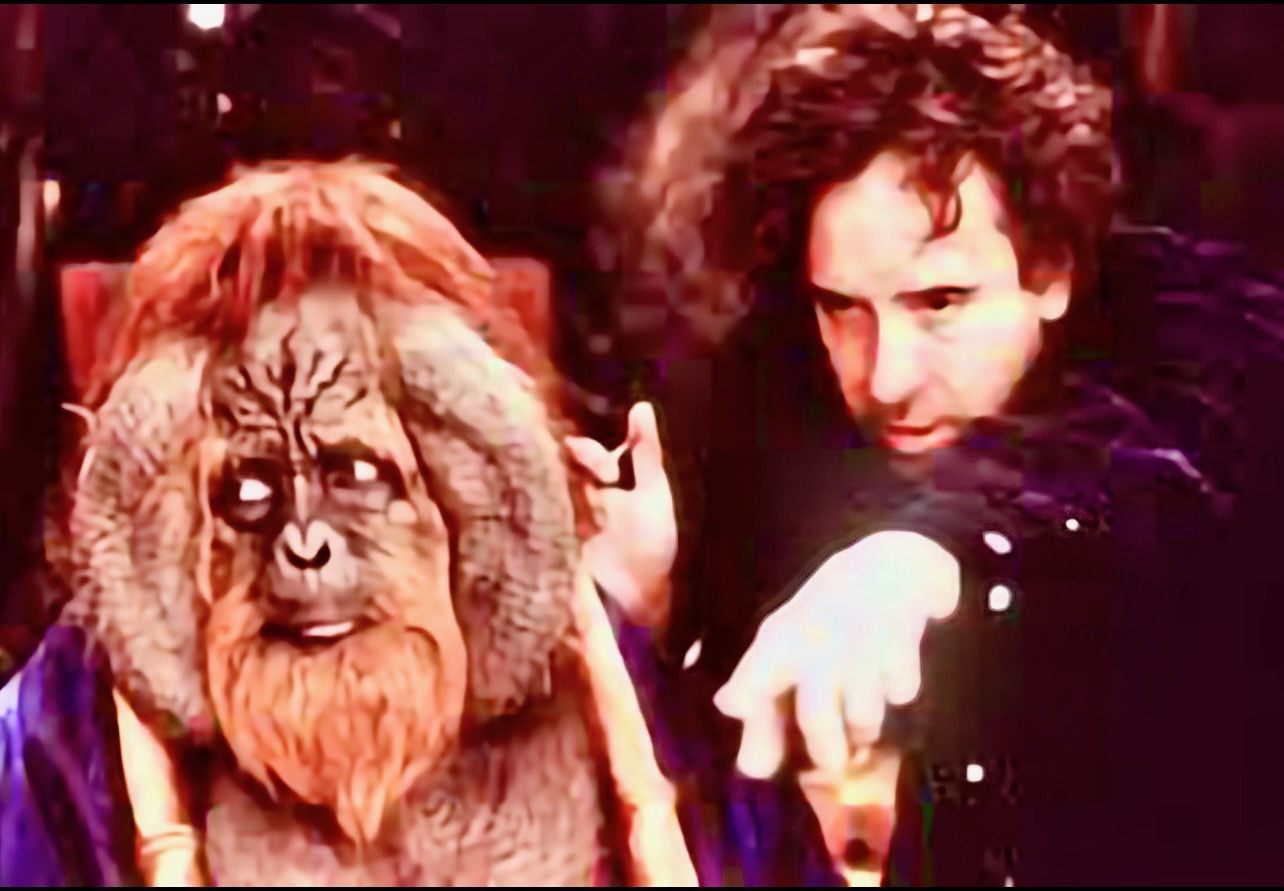
One of the difficult decision every screenwriter at one point has to make is to choose between committing to a project you love which might be hard to get made, and taking on projects that might not be the kind of films you came to Hollywood to make but are films you know will probably trigger a ‘greenlight’ — that is, be put into production. It’s the case (though everything is changing!) that a substantial part of a writer’s pay is the ‘production bonus’. If you maintain a credit on a film that is actually shot (most scripts are never made) it can trigger half your earnings. In this case, the project was doubly attractive. I loved Tim Burton’s films. I loved the original PLANET OF THE APES with Charlton Heston. And I was also a humble acolyte of the legendary Rod Sterling, creator of THE TWILIGHT ZONE TV series and the writer of the original screenplay. You only need to glance at the original muddled novel written by Pierre Boulle, first published in French as LA PLANETE DES SINGES, to know that this film is really Serling’s own allegorical work. When we arrived in L.A., Dick Zanuck told us the script we’d be adapting had been written by one of the top screenwriters in the business, William Broyles, Jr., who had written APOLLO 13 among many other films. Now I have to be honest and say I don’t know if Bill Broyles was ready to move on or if he had become lost in the weeds. It happens after many drafts of a script that seems to refuse to cohere. Still, replacing a fellow writer is awkward — especially one as talented as Bill Broyles, yet the business side of screenwriting depends on it. Sometimes it’s justified; many times, it’s not. To be honest, the script Dick and Tim had was simply not comprehensible. There was a basic illogic to the ‘rules’ of the story. My writing partner was not a big sci-fi guy, but I was a fanatic sci-fi enthusiast. I grew up reading comics and watching every sci-fi film released in my local theater in Philadelphia on Saturday afternoons. Meeting in the vast production offices and sound stages of the film in downtown L.A., we felt how tense the situation was since the clock to the start date was ticking. On the other hand, Richard Zanuck was a charming, calm, down-to-earth boss, someone who listened intently and respected everyone on the set, a rare quality considering he came from Hollywood royalty, his father a controlling presence at 2oth Century Fox for many years. Tim Burton, on the other hand, boyish in many ways, also had an aura, like the golden rays flaring from a medieval painting of a saint, as if you could see characters just spilling out of his head around him as he spoke softly. I remembered he sketched images and characters on a pad during our meetings, and I always wondered how I could get my hands on some of them. A particular problem in the story was the spaceship that brought Mark Wahlberg to the PLANET OF THE APES. There was also a second spaceship buried deep in the ground involved later in the story, and the two storylines seemed mutually exclusive. At this very first meeting, an idea jumped out at me, and I said, ‘What if they’re the same spaceship?‘ They countered again that they appear at two different times in the narrative. Being that sci-fi kinda guy, I made the simple suggestion it could work if the ship traveled through a time warp. Granted, it’s a common narrative device, but it changed the whole dynamic. It offered a mystery to be solved, and every scene that didn’t connect before suddenly seemed like foreshadowing. Dick suddenly sat upright, ‘We have a breakthrough.’
We worked furiously on a detailed outline of how we’d transform the old script without changing the basic sets or characters. It had a mathematical aspect to it in many ways: take what was given to us as A plus B plus C plus D, but make the sum add up to something different. After Tim and Dick approved, we were invited to an enormous meeting of the entire crew where Tim would finally reveal the new story of the film. We gathered with over a hundred people pressed into a giant room and waited for Tim to go up and present the exact story. Writers are usually ‘in the way’ on a film set, so we stood against the back wall — which is where I spotted Tim enter and head directly to me. Tim said, ‘Since you’re writing it, why don’t you explain the story?’ With no time to question Tim, or to panic, I walked to the front of a long blackboard and just started ‘pitching’ the new idea. I began drawing timelines and diagrams in chalk, afraid to stop talking in case they started Booing. Thank the Apes, when I finished, the crew broke into applause, and we received congratulations as everybody rushed off to meet the deadline. We knew we’d get the re-worked script done in time — but there was a different story problem nagging us. And no one else cared about it.
Walking in Rod Serling’s Twilight
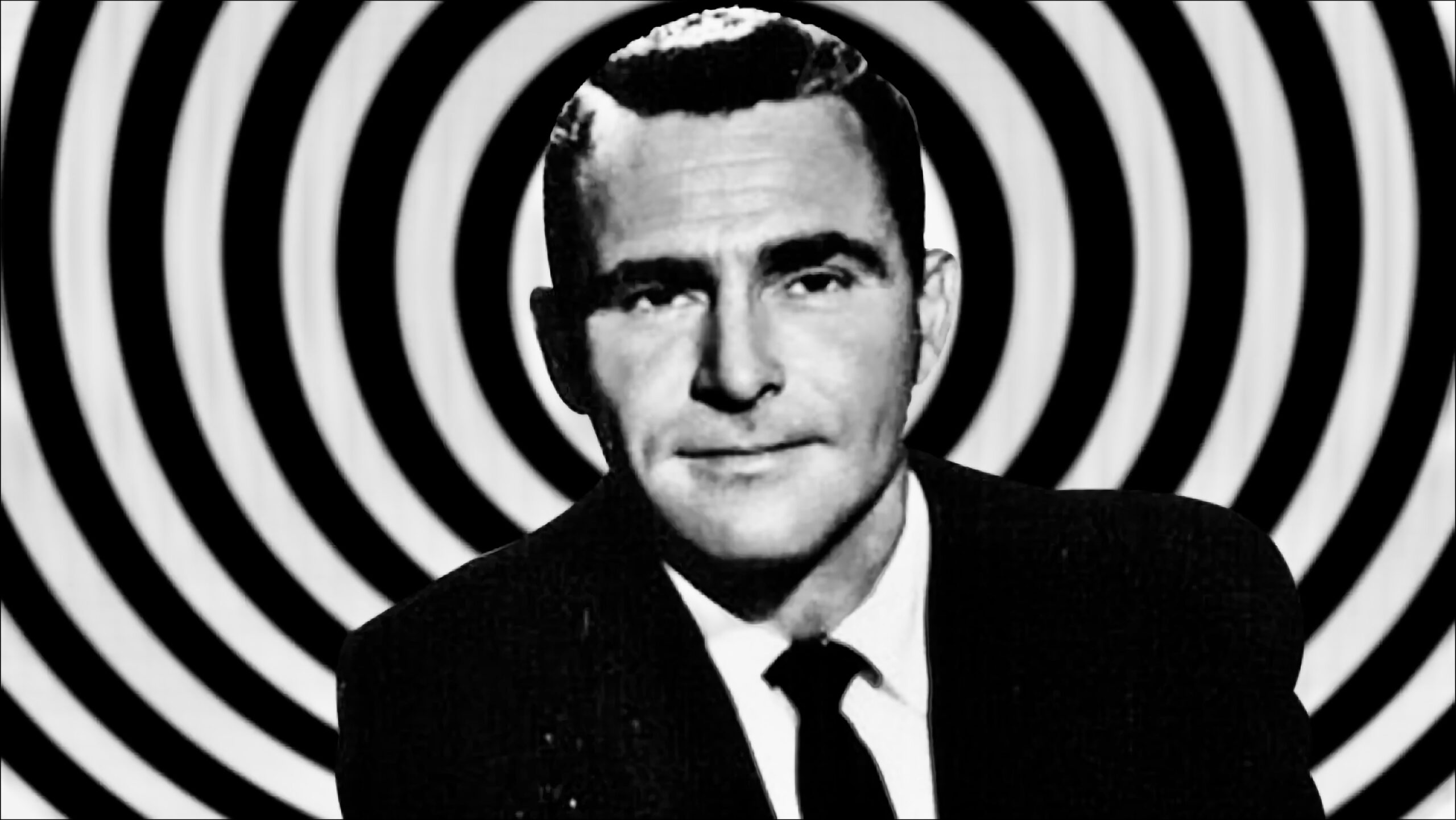
The many sequels, prequels, and reboots of PLANET OF THE APES vary in quality and intent, but what they all mostly miss — except for the original story — is Rod Serling’s uncompromising intent to use science fiction for its original purpose: an allegory to hold a mirror up to social and political troubles. Writers like H.G. Wells, Karel Čapek, or Isaac Asimov saw their stories as more than ‘action’ pieces. They knew their kind of fiction could be a powerful way to comment on the dangerous flaws in human nature. Rod Serling was a dedicated practitioner of that tradition. Serling started writing as a very progressive playwright when television did live drama. His politics, though, were not theoretical. They came from his own life.
Serling grew up in a small town in New York State and remembered the humiliation of being denied membership in a fraternity because he was Jewish. During World War II, Serling joined the 11th Airborne Division and fought in the Pacific against Japan. As recounted by the National World War II Museum, on November 20, 1944, the 11th Airborne was sent to the Philippine Island of Leyte, where the paratroopers would have to fight as infantry against determined Japanese defenders. In December, Serling’s regiment was ordered to fight their way forty miles along narrow trails through steaming jungles and across high ridges, frequently engaging in bloody, often hand-to-hand combat. After weeks of vicious combat, many of the paratroopers, Serling included, began to buckle under the pressure. His experiences left him deeply scarred. In one instance, Serling’s good friend, Private Melvin Levy, ventured out to watch an aircraft drop off food crates to the beleaguered paratroopers. Levy was joking about where the food would fall when one of the crates landed on his head and decapitated him as Serling looked on in horror.
Although Serling was injured during the war, one being a wound in the kneecap that would plague him to the end of his life, Serling was still ordered to join a parachute jump outside Manila. The 11th Airborne engaged in weeks of savage fighting to capture the city, where Japanese troops fought to the death and also inflicted many atrocities on civilians. Two experiences remained seared in Serling’s memory. During the fighting for Rizal Stadium, Serling shot and killed a Japanese soldier frozen on third base in the baseball diamond. On another occasion, a Japanese soldier surprised Serling at close range. Serling said he was prepared to die. In a split second, though, another paratrooper stepped behind Serling and shot down the enemy soldier. By the time the war had ended, only one out of every three men in Serling’s regiment had survived. Serling returned home scarred and to some degree embittered, although he had received a Bronze Star and Purple Heart. His family said he was plagued by night terrors about the war for the rest of his life.
Serling wanted to write about political violence, injustice, racism, and other issues. But TV was a long way from its current appetite for controversy. Serling could never forget for even a moment the insult he suffered when network censors gutted his 1956 teleplay on the vicious murder of Emmett Till, a young teenage boy visiting family in the south who was lynched because of a false, racist rumor that he had ‘whistled’ at a white woman. The network made Serling move the lynching back a century to the 1800s and change every black character to a white cowboy! Thinking hard about his future, Serling decided the only way he could ‘make his point’ was if he slipped it inside a science fiction story. The thing about allegory, not everyone ‘catches on’ and Serling was convinced network executives would be too obtuse to ‘get it’. He was right.
Charlton Heston’s Cameo
I was stunned to learn that no cameo had been offered to Charlton Heston, the film series’ original astronaut. Everyone seemed surprised when Lawrence and I mentioned it. We lobbied hard, Dick Zanuck relented, and we proposed that Heston play ‘Zaius’, Thade’s dying father. Here was the context:
As a public relations gimmick, Heston, who was famous for his right-wing politics, was made President of the National Rifle Association. In his most famous speech, at an NRA Convention Heston held up an old flintlock rifle and said “So, as we set out this year to defeat the divisive forces that would take freedom away, I want to say those fighting words for everyone within the sound of my voice to hear and to heed — and especially for you, Mister (Vice-President Al) Gore: ‘From my cold dead hands!'”
It was arranged for Heston to fly in for two days. But we heard he was pretty compromised at this point. No one was sure if he could memorize lines. We urged Tim to read the speech, O.C., line by line. This was all to our benefit because we wrote Heston a speech that he could easily refuse to say. I had the thought that Heston should warn his son, Thade (Tim Roth), that humans with guns are the most dangerous animal on the planet!
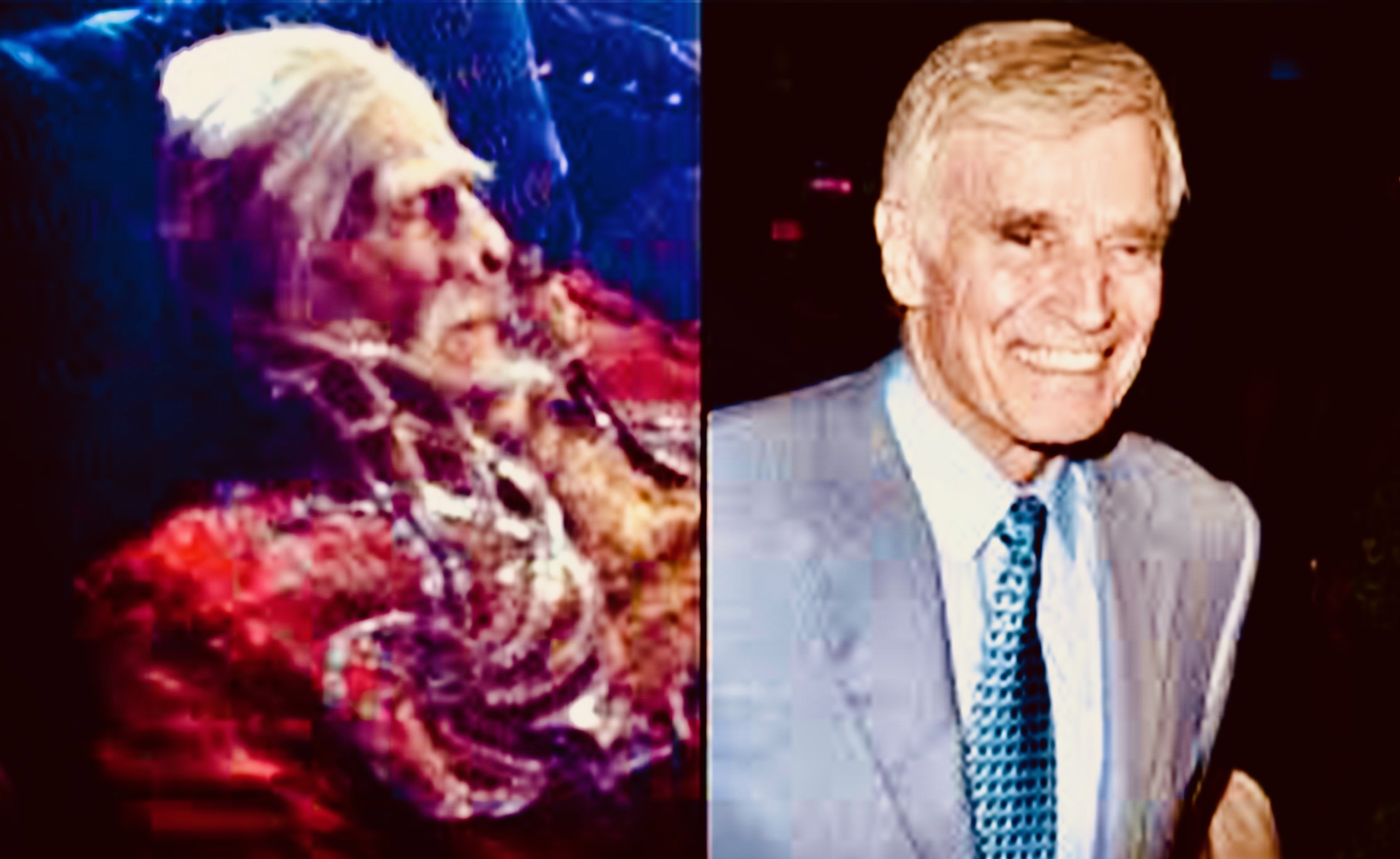
Heston was put in ape makeup by the incomparable artist Rick Baker (who would also do our MIGHTY JOE YOUNG) and settled onto a divan. We did a couple of fun things in the speech. In the original PLANET OF THE APES (1968), Heston, as George Taylor, delivers this iconic line when an ape grabs him: ‘Take your stinking paws off me, you damned dirty ape!’ Instead, we had a human touch Heston triggering a mirrored version, ‘Take your stinking paws off me, you damned dirty human!’, but then Zaius presents a contraband handgun to his son. This exchange follows:
Zaius: I have something to tell you. Something my father told me… and his father told him. Back along our bloodlines to Semos. In the time before time … we were the slaves and the humans … were the masters.
Thade: Impossible.
Zaius: (Re: handgun) Break it. What you hold in your hand is the proof of their power. Their power of invention. Their power of technology. Against this, our strength means nothing. This has the power of a thousand spears. I warn you. Their ingenuity goes hand in hand with their cruelty. No creature… is as devious, as violent. You must find this human quickly. … Damn them. Damn them all to hell.
The last line was a callback to the end of the Serling film, where Heston’s human character, after seeing the Statue of Liberty in pieces, curses out humanity for destroying their own planet. Heston never caught on that the scene was aimed squarely at his NRA tenure—Burton kept the set genial, and the actor wrapped, satisfied he had spiced up the franchise he’d helped inaugurate.
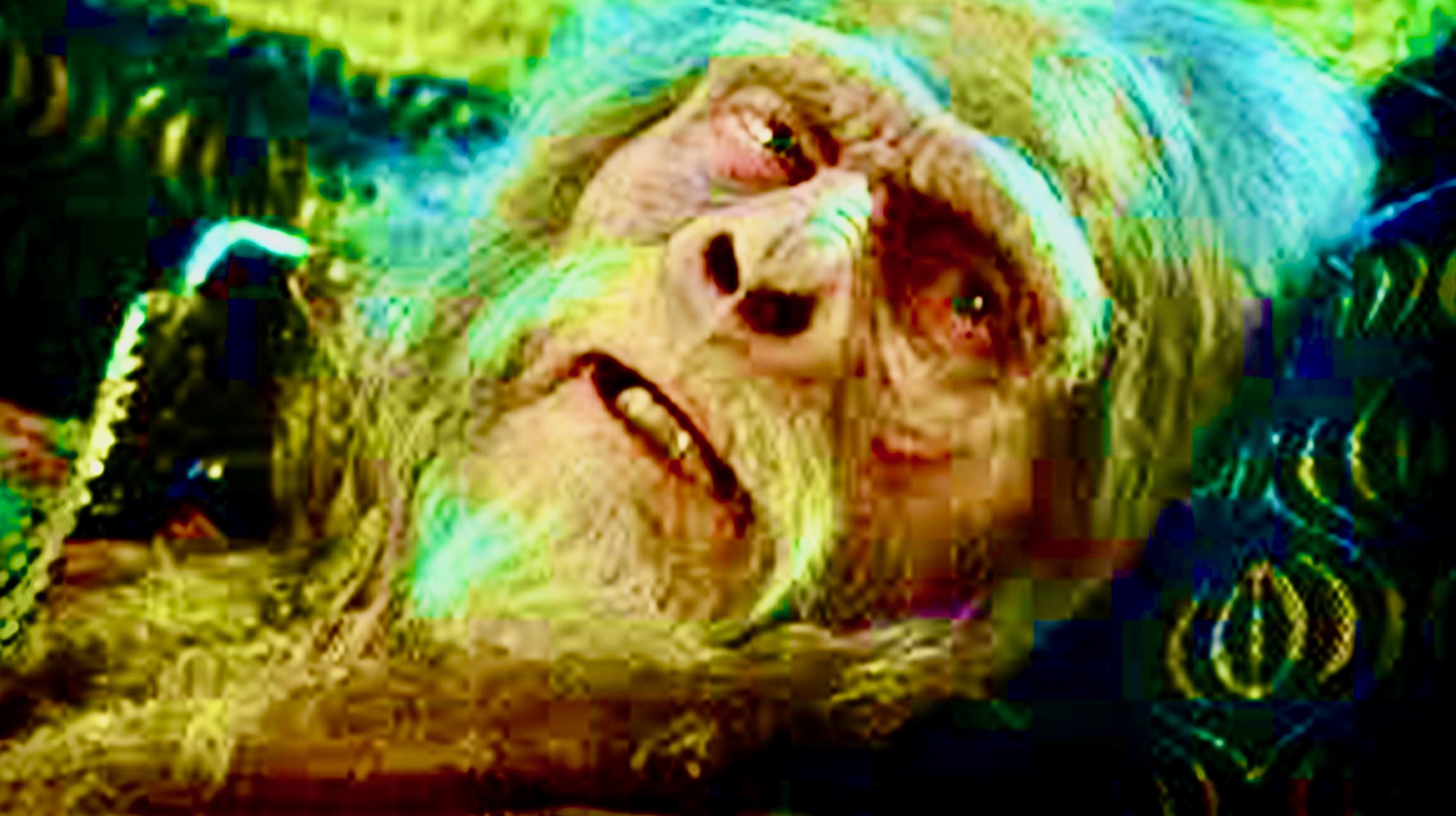
In truth, no one at the studio caught on to what I wanted to do. I thought, ‘Why not see where else we can sneak in some politics!’ We decided to slip our allegorical ideas their critique into three tory areas: first, establishing a decadent ape aristocracy that like most aristocracies easily compromises with dictators (cf.: Bezos, Musk, Zuckerberg); add a human child being kept like an ape; and, using our time travel tool, writing a new ending that suggested that in American politics, the apes had already taken over.

We Have Nothing to Fear but Ourselves
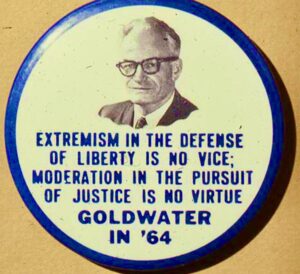
My awareness of the ferocity of American political campaigns came with the 1964 campaign between Lyndon Baines Johnson (LBJ, JK’s Vice-President who took over the assassination) and Barry Goldwater, the far-right wing senator from Arizona and a clear herald of today’s MAGA movement. The Democrats ran incessant TV ads attacking Goldwater as ‘extreme’. His strange and defiant response was to add a new slogan to his campaign: ‘Extremism in defense of liberty is no vice.’
Dare I try it? Yes! We wrote a chatty dinner scene with wealthy bourgeois apes that General Thade attends because he’s wooing their ‘liberal’ daughter, Helena Bonham Carter. We made the table talk overtly political. Senator Nado scoffs that earlier reforms ‘gave us a welfare state that nearly broke us.’ When Thade has had enough of their ‘snowflake’ chatter, he snaps, ‘Extremism in defense of Apes is no vice!’
Would they let us use that line? Of course, no one got the source! Thade’s twist on Goldwater’s phrase lets the audience hear, in Dolby Digital, just how absurd moral absolutism sounds when the speaker is a primate in bronze war‑paint.
We quickly slipped in other lines and moments, which I guess today would be called ‘Easter Eggs’. Limbo, the dealer in human slaves (Paul Giamatti), hawks a red‑haired ‘show human,’ bragging she has ‘just enough spine to dance, not enough to vote.’ Paul Giamatti was very friendly on set despite the discomfort of the ape prosthetics. I deeply regret not mentioning to Paul that I actually knew about his father, A. Bartlett Giamatti, not as the Commissioner of Baseball who in his short tenure had to resolve the Pete Rose gambling crisis by convincing Rose to resign, but as the essential scholar of Renaissance Literature and particularly his book Play of Double Senses: Spenser’s Faerie Queene (1975).
On the Senate steps, we had Thade seize a captured rifle and bellow another Goldwater pastiche. The oration lasts barely twenty seconds, yet its cadence is so close to the 1964 original that politically attuned viewers hear the dog whistle instantly.
Above all, it is the mind-blowing ending of the film that was our boldest ‘Rod Serling’ move. Astronaut Leo Davidson (Mark Wahlberg) flees Ashlar, threads the same electromagnetic storm that brought him there, and crash‑lands at the Lincoln Memorial on the National Mall — thinking he’s home safe; that is, until a swarm of DC Cops appear — and they’re all apes. Wahlberg turns to where the statue of Lincoln should be, only to stare up at a giant sculpture of Thade, our simian Abraham Lincoln. Chiseled in marble is a tribute to Thade for ‘saving’ the nation. The studio trimmed the lettering, but the point survived: societies can pivot from republic to tyranny while their monuments remain seductively intact.
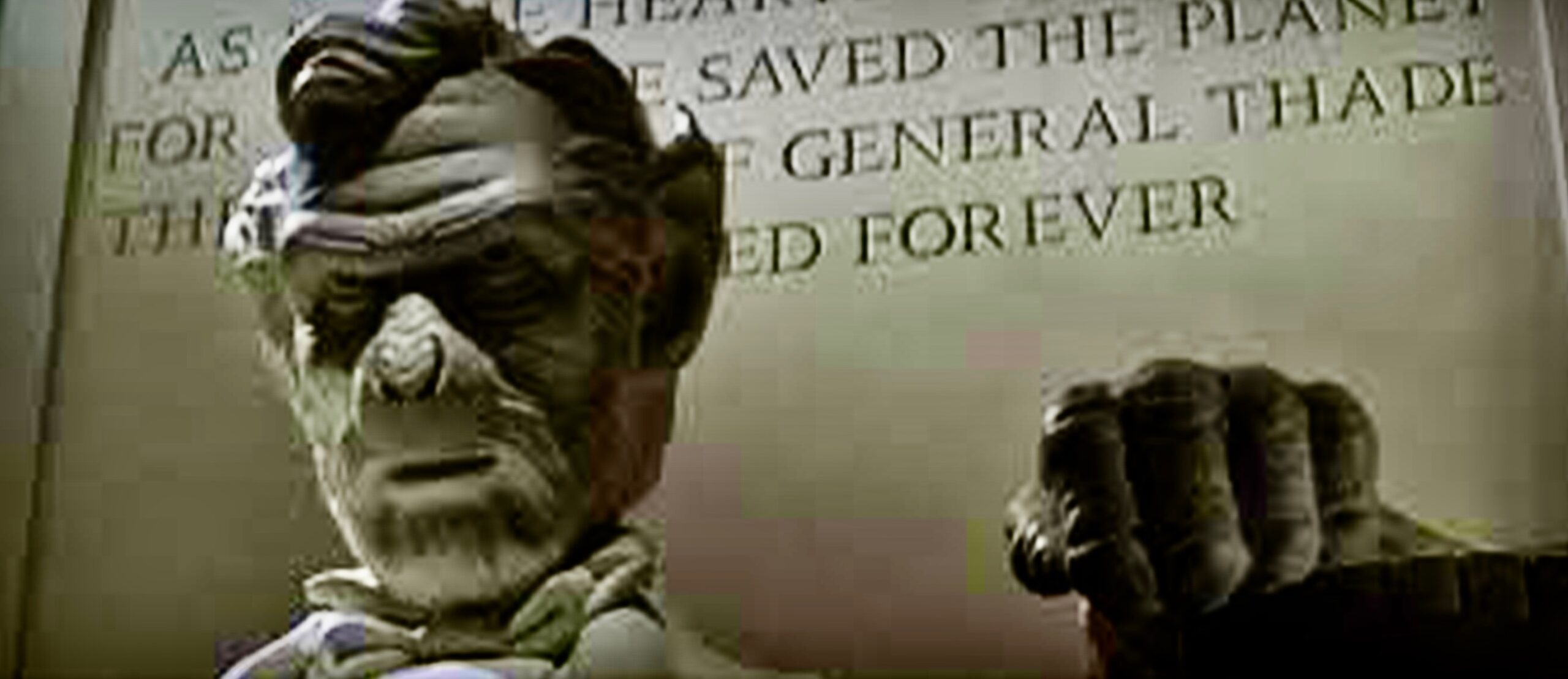
This Apes was shot in 88 days, edited at breakneck speed, and rushed into a 27 July 2001 release slot. The schedule shows: tonal extremes, the sound-stage-only shoot feels claustrophobic at times, subplots vanish mid‑swing, and Danny Elfman’s score evolves faster than the narrative motivators. Of course, our jury-rigged script had patched scenes as well. Yet individual moments—Ari tracing a human’s cheek, the torch‑lit cavalry charge across the Forbidden Zone, Thade ricocheting bullets inside the crashed Oberon—retain Tim Burton’s Gothic zing. Paul Giamatti, whose orangutan slave‑trader is the main comic relief, summed up the existential payload: ‘We’re all apes, right?‘ Exactly—and today the apes are packing legislative majorities.
Maureen Dowd gets it
On July 29, 2001, Maureen Dowd devoted her New York Times Op‑Ed ‘Apetown, My Hometown’ to the movie’s subtext, noting that Thade’s catch‑phrase about extremism ‘could have been piped in from the Republican cloakroom.’ No other reviewers noticed the historic reference; 20th Century Fox’s marketing chiefs certainly didn’t trumpet it. Dowd cleverly connected the film’s ape demagogue to the then‑ascendant hard‑right mood in Washington. I printed the column and keep it in my office.
Thade’s mixture of bullying, grievance, and feral certainty makes the film play today like an accidental prophecy. By the time the Trump era began in 2017, someone told me they saw memes of Roth’s war‑painted chimp circulated online with the caption Make America Ape Again.
An Orange Ape
I had another strange connection to this film. As I mentioned, we wanted the shock of seeing a human child kept in a cage, the way too many people even today try to keep apes as ‘pets’. Apes cannot be pets. Anyone who sells one is complicit in the certain murder of the ape’s mother to get hold of a baby. An ape who reaches puberty cannot be managed safely. Years ago, after I sold my first script, I did what I always used to do: tried to think of a way to blow through every penny! I had just discovered an organization called EARTHWATCH, which puts volunteers in touch with scientific researchers and conservationists around the world. One of the great experiences of my life was when I volunteered with Birute Galdikas in Kalimantan (Borneo) Indonesia. Birute was one of the three legendary women chosen by the anthropologist Louis Leakey to finally do long-term studies of the Great Apes, our cousins on this planet. The others were Jane Goodall, who studied chimpanzees, and Diane Fossey, who was murdered trying to protect her beloved mountain gorillas. Birute studied ‘the red ape’ — orangutans, whose habitat was once across Asia but is now barely surviving in Indonesia.
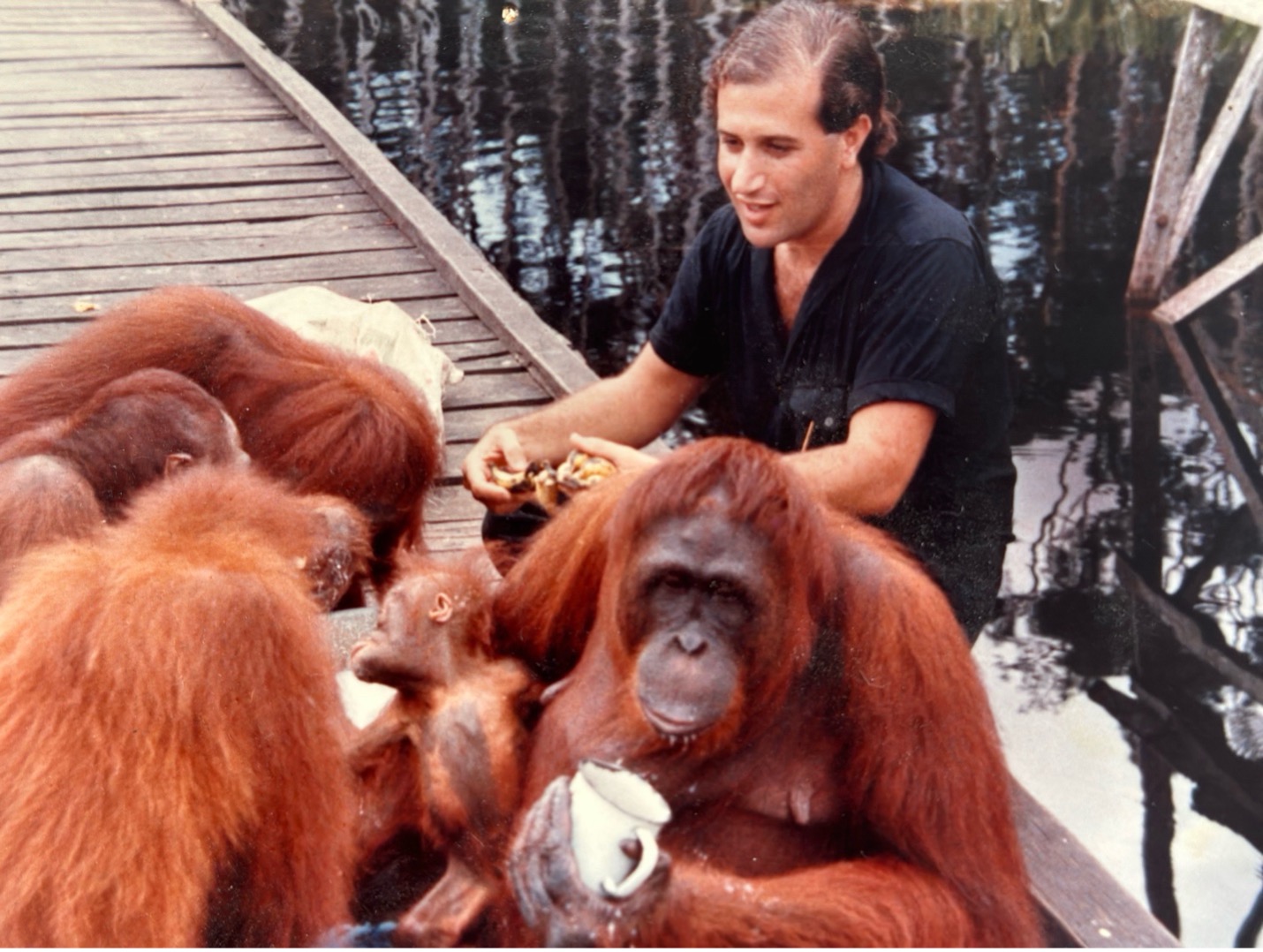
Through my time with Birute, I met another great woman, Patti Ragan, who has dedicated her life to establishing an essential sanctuary for Great Apes in Wauchula, Florida, called the CENTER FOR GREAT APES (centerforgreatapes.org). Patti tracks every ape used in research or kept too long as a pet and tries to convince people to let them come live with her in family units at her spectacular facility. With a brilliant staff, volunteers, a hospital on-site, and a well-groomed ‘forest’ environment, Patti has let the apes live in an approximate social structure they are used to in the wild. Patti has also spent a fortune building soaring walkways in the tree canopies so the apes can at least feel the freedom of their natural life in the wild.
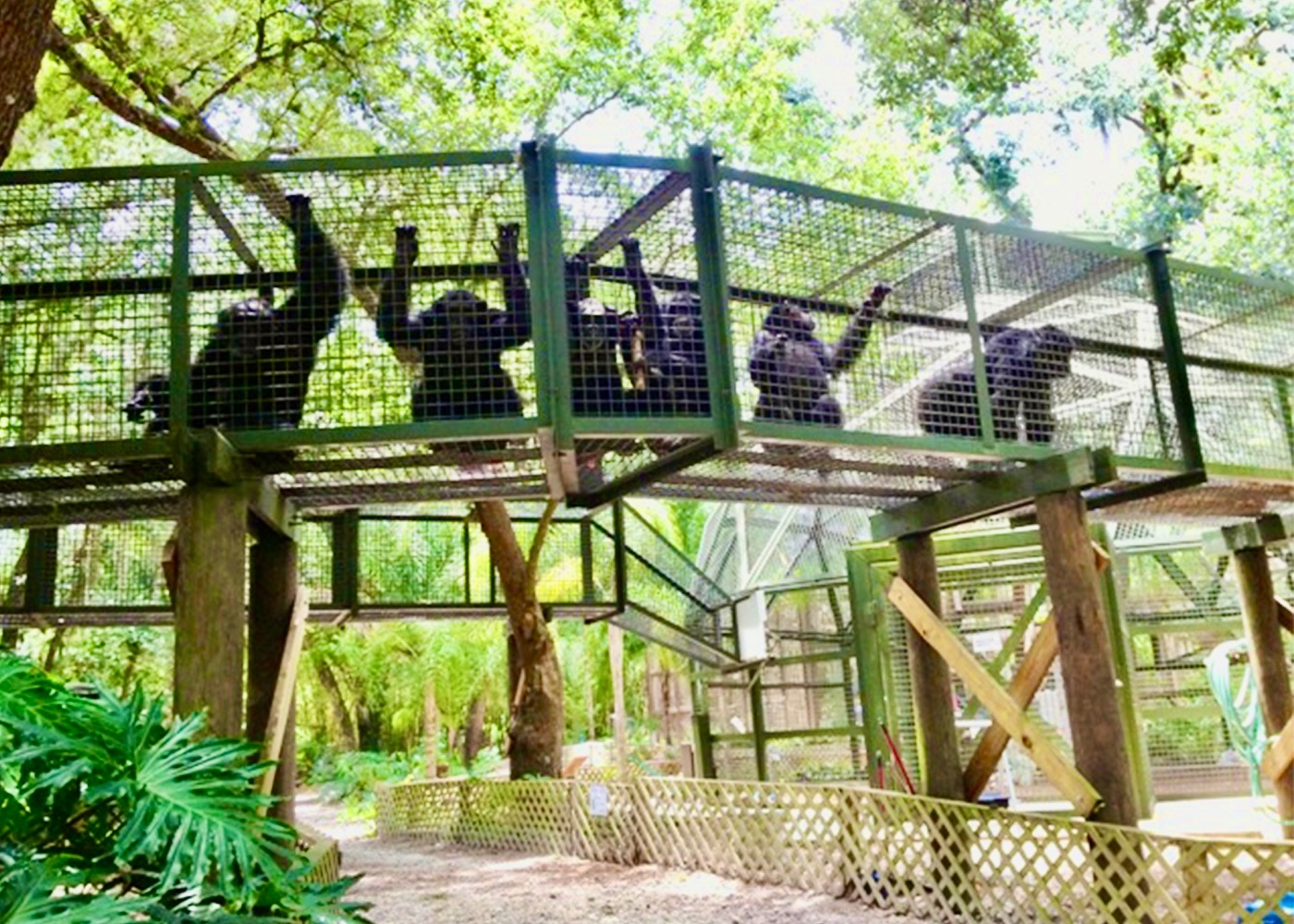
Patti has rescued apes tortured in roadside circuses and labs, and even provides a home to Michael Jackson’s Bubbles, who, of course, outgrew his degraded life as a pet in a diaper. I highly recommend you donate to it. And, to my chagrin, the chimpanzee kept my Mark Wahlberg has ended up with Patti. These days, the series has thankfully decided to use CGI apes instead of live apes. But as much as we support conservation of ape habitat, our own film exploited a young ape, too.
One of the things about Hollywood is that it continues, even in its present turmoil, to suggest luxury and happiness to people on the outside. In the early days of getting ready to shoot, we arrived at the sound stage and met a young couple whose 5-year-old daughter had been cast to play the young human girl kept in a cage by apes. They were working-class people from Orange County and openly excited about their daughter being in a film. To make the long trip from home, they had taken some of the money coming in from their deal and bought a brand-new pick-up truck. Tim Burton, like most directors, wanted to do camera tests with actors in costume just to see how things looked on screen. This was a very long day, but the young couple with their daughter were enjoying themselves outside the soundstage. Craft services offered treats, and everyone loved the little girl. Tim had been shooting some background ‘apes’ in Rick Baker’s extraordinary makeup. About a dozen of the soldier apes were being performed by very tall men, well over 6 feet, and a few held giant spears. Suddenly, Tim called for this little girl to be brought into the sound stage for her test. Won’t this be adorable! The door opened. The parents entered, each holding the girl by a hand. She took several steps into the vast space, took one look at the giant Soldier Apes standing erect in their military costumes, screamed, and ran out. No matter how hard they tried, the parents could not convince her to return. The role was recast with a different young girl.
When I’m in a mood, I like to say, ‘Hollywood was invented to break your heart.’
Serling mission accomplished
If Rod Serling taught us anything, it’s that science fiction is most true to itself if the allegory emerges. In 1968, the film’s target was nuclear brinkmanship; in 2001, it was ideological fanaticism. Today, in 2025, as American Democracy struggles to endure, Tim Burton’s film feels like a dispatch from the future. Not bad for a franchise entry; people expected it to be an eccentric iteration.
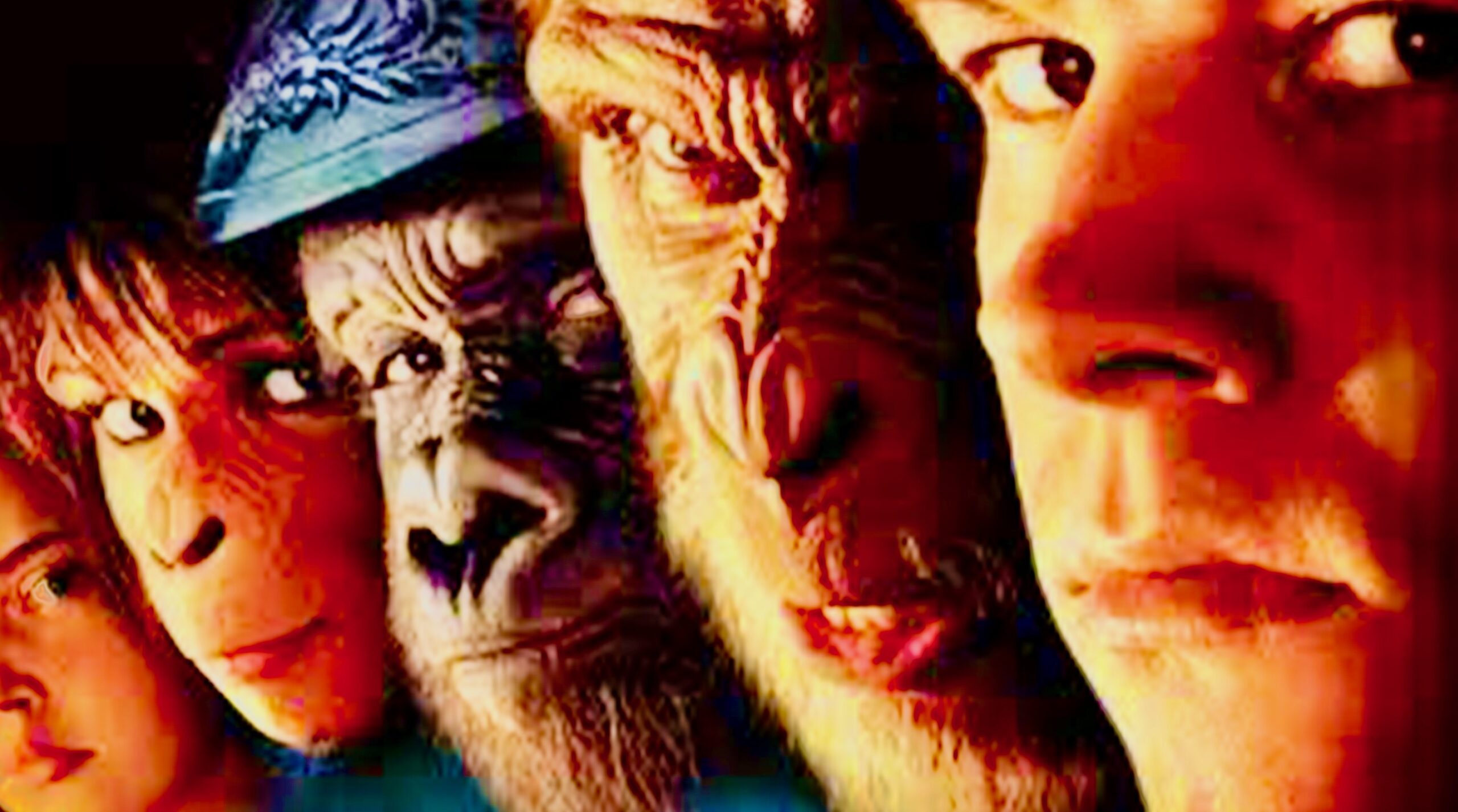
Maureen Dowd’s Op Ed was written during the term of George W. Bush Jr. (who would, in just a few months, be challenged by the devastation of 9/11). It’d be hard not to infer 2 things: there have always been ‘Thades’ among us; and second, Thade’s legions are in firm control in MAGA Washington, D.C.
Maureen Dowd ends her column this way:
‘(The Bush administration has tried) … easing rules on the levels of arsenic in drinking water. There was even talk last week that the White House might pull out of a U.N. conference on racism. During the campaign, W. wouldn’t come out firmly in favor of teaching evolution over creationism. That should have been our clue that he’s unwilling to evolve. He is so mired in the past; he almost seems antagonistic toward the future. Without giving away the ending of the new version of the classic collision-of-species movie, I can tell you there’s a chilling scene set in Washington. It shows what can happen when the guys in charge monkey around in the wrong direction.’